Essential Oils Safe for Dogs: What Groomers Want You to Know
There is no universal list of essential oils that this guide can promise is safe for every dog. Safety depends on the particular product, concentration, exposure and animal. Before using an essential-oil product on or around your dog, ask your veterinarian about that exact product.

What Are Essential Oils?
Essential oils are concentrated plant extracts. Dogs can be exposed by swallowing them, skin contact or breathing them in. Natural origin does not establish safety. Dogs can become ill from exposure; the particular liver-enzyme deficiency often described for cats should not be attributed to dogs.
Avoid Home Dilution Recipes
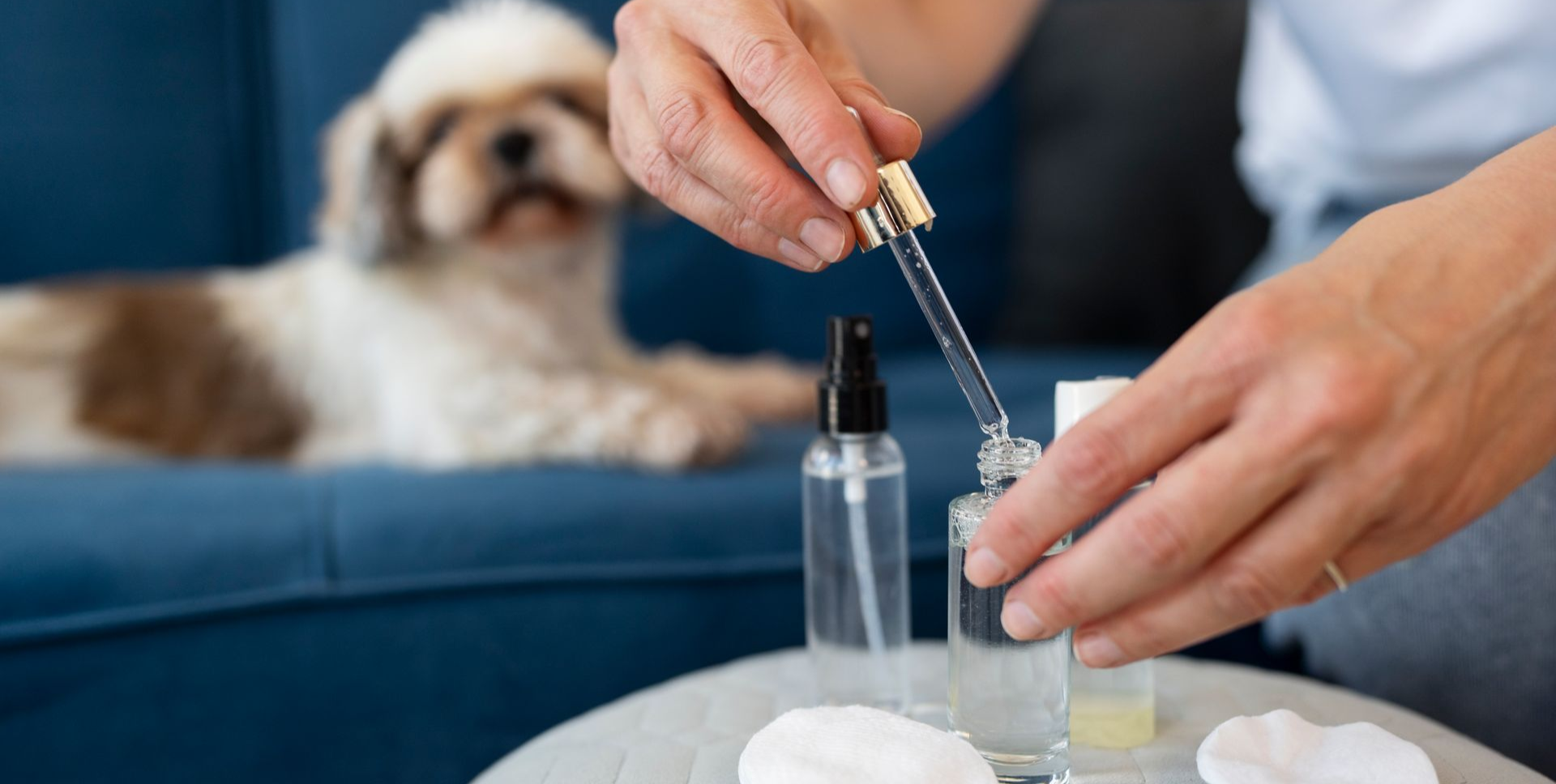
Do not apply concentrated essential oils directly to your dog. A homemade one-drop-to-50-drops recipe is not a safety guarantee. This guide does not recommend putting diluted oils on fur or bedding, feeding oils to a dog, or using a diffuser as a treatment.
Product labels and veterinary advice matter. A formulated grooming product is different from a bottle of concentrated oil. Do not add essential oils to a shampoo or spray yourself, or assume that a groomer can make every oil safe.
Health and Pest-Control Claims
This guide does not recommend lavender, chamomile, frankincense, cedarwood, ginger or cardamom as treatments for anxiety, skin disease, digestive symptoms or immune problems. Essential oils should not replace a veterinarian-recommended flea and tick prevention plan.
Recognizing a Possible Exposure
If your dog has swallowed an oil, has oil on the skin, or develops drooling, vomiting, weakness, tremors or breathing difficulty after exposure, contact your veterinarian promptly. Do not wait for a second trial of the product, and do not induce vomiting unless a veterinary professional directs you to do so.
Frequently Asked Questions
Which essential oils are safe around dogs?
No oil is endorsed here as universally safe. Discuss the exact product and how it would be used with your veterinarian.
Are lavender or chamomile diffusers always safe?
No blanket assurance applies. Do not use a diffuser as treatment or expose a dog to a product without appropriate advice.
What should I use for dog odors at home?
Clean bedding and maintain an appropriate grooming routine rather than masking odors with an unverified oil product. Persistent unusual odors can need veterinary assessment.
Can cedarwood replace flea or tick prevention?
This guide does not recommend that substitution. Ask your veterinarian for an appropriate parasite-prevention plan.
Boops N' Bubbles provides mobile dog grooming. This article does not advertise essential-oil treatment or aromatherapy as part of that service.