Why Is Your Dog Shedding in Winter?
Dog shedding in winter can be perfectly normal. Shedding is how a dog gets rid of old or damaged hair, and how much and when depends largely on breed and coat type. Some dogs shed lightly all year, so a cold calendar does not guarantee a hair-free house. What deserves attention is a change in your own dog: loose hair across the coat is a different concern from a new bare patch, sore skin or constant scratching.
For East Bay owners, Boops N' Bubbles' Bath Package is a useful starting point when the main problem is loose coat and routine cleaning. If you are seeing discomfort or an unusual change, describe that to your veterinarian instead of assuming a deshedding appointment will explain it.
Why your dog may still be shedding in winter
The American Kennel Club's shedding guidance explains that coat type plays a major role. Dogs with thick double coats, such as Golden Retrievers, are more likely to shed year-round. Some dogs, especially indoor dogs living with steady artificial light and temperature, shed lightly through every season. Shedding is mainly triggered by changes in daylight and temperature.
AKC also notes that dogs that shed seasonally usually shed most in spring and fall. So a heavy winter shed is not always the seasonal pattern people expect, and it is worth comparing it with your dog’s normal routine rather than with a neighbor’s different breed.
Think back over the last few weeks. Is this the same amount of hair you normally notice, or a clear change? Is the coat still evenly covered? Is your dog comfortable being brushed? Those observations help you decide what to ask next without trying to diagnose the cause at home.
Avoid assuming East Bay weather produces one identical shedding schedule for every dog. Breed, individual coat and the dog's circumstances differ.
Describe the hair, not just the mess
“The house is covered” tells a groomer that you need help, but a little more detail improves the conversation. Are you finding soft loose fluff, short hairs in upholstery or tangles in particular areas? When did you first notice the change? What grooming has happened recently?
You can keep a short note and a few clear photos. There is no need to save bags of fur or brush until you have a dramatic pile to show. The purpose is to describe a pattern, not measure your dog against a shedding video online.
What grooming can reasonably address
A grooming appointment can focus on cleaning, removing loose hair and helping you keep the coat manageable between visits. It cannot stop normal shedding, and it cannot identify a medical cause from a photograph. Clear limits are part of a useful service explanation.
Boops N' Bubbles describes its bath service as including a bath with shampoos selected for the dog’s skin and coat, a de-shed treatment if needed, then a hand blow-dry and brush. Ask how that applies to your dog's current coat rather than assuming every winter appointment needs the same work.
The mobile-grooming setup is cage-free and one-on-one at your door, so your dog is not crated or left waiting. That describes the appointment environment, not a guarantee that every nervous dog will feel comfortable with every task, so share handling concerns before the visit.
Adjust the routine without attacking the coat
More hair on the floor can tempt an owner to brush harder or use every tool in the drawer. A better starting point is asking the groomer to demonstrate a better tool and comfortable technique for your dog's coat.
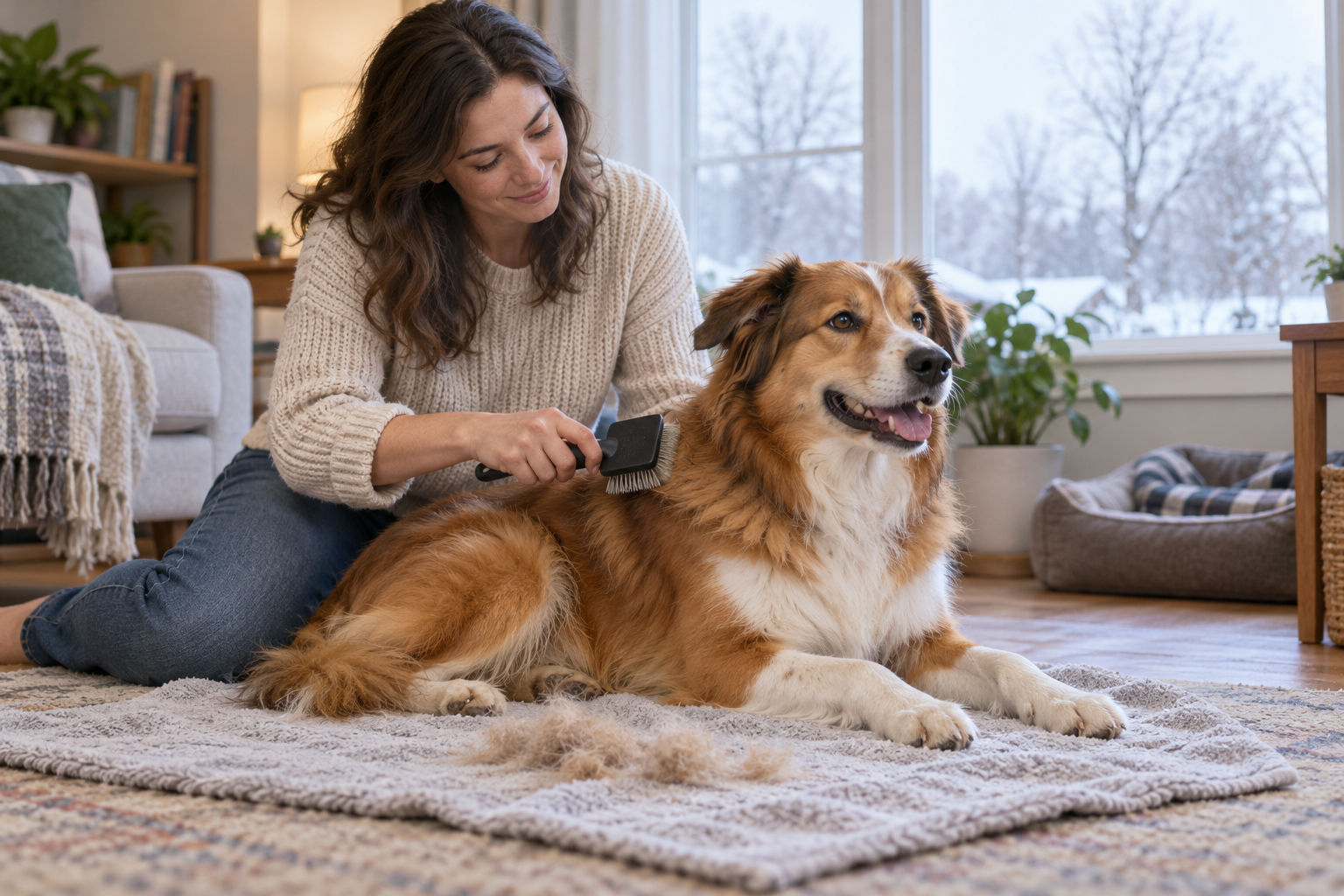
AKC suggests that heavy shedders may need brushing several times a week, or even daily during peak shedding, while lighter shedders still benefit from consistent grooming. For short coats, simple tools such as a grooming glove or a natural-bristle brush are usually enough. Longer and double coats often need tools that reach the undercoat, such as a slicker brush, and during heavy shedding a coat rake or de-shedding tool can lift loose undercoat.
Whatever you use:
- Work in the direction of hair growth with gentle pressure.
- Comb out tangles before brushing further.
- Stop if your dog resists or seems uncomfortable.
- Ask the groomer to demonstrate the tool and technique on your dog’s coat.
- Tell the groomer about any area you cannot comfortably brush.
Repeatedly pulling at the same spot is not a substitute for help with technique or coat condition. The right routine is one your dog tolerates and you can repeat calmly.
When to call your veterinarian first
Shedding is normal, but unusual hair loss can point to a problem. AKC says conditions such as hypothyroidism or allergies can affect skin and coat health. Contact your veterinarian if you notice thinning fur, bald patches, irritated skin, odor, a sudden increase in hair loss, or hair loss concentrated in one area.
A bath can clean a coat, but it cannot establish why a skin change has happened. Ask your veterinarian whether grooming should go ahead, and share any care instructions with the groomer.
Keep bath expectations simple
A clean coat can feel different, but fragrance and appearance are not a complete assessment of skin comfort. If a smell keeps returning or the dog remains itchy, do not keep adding baths without asking the veterinarian about the underlying concern.
Tell the groomer which products you have used recently and whether anything seemed to make matters worse. Avoid guessing at a new treatment based on an online recommendation. A groomer can discuss grooming products, while the veterinarian handles diagnosis and medical treatment.
After a visit, ask what the groomer observed and what upkeep was recommended. Some hair will keep coming out between baths, because shedding is an ongoing process. The useful measure is whether you understand the coat better and have a manageable next step.
Make the next appointment decision from observations
If your dog's winter shedding looks familiar and the coat remains comfortable, a routine grooming discussion may be appropriate. If something is different, write down the change and choose the professional who can answer that question. You do not have to decide the cause alone.
For owners in Danville, San Ramon and nearby East Bay communities, confirm the service address when arranging a mobile visit. Share the coat concern before the appointment so the plan is based on the dog arriving that day. Tell Boops N’ Bubbles when the shedding changed, which areas are hard to brush and how your dog handles grooming, and ask whether a Bath Package fits or whether a veterinary question should come first.
Winter does not cancel coat care, and a pile of hair does not automatically signal a problem. Pay attention to the pattern, ask for practical grooming help and let a veterinarian assess any changes that go beyond ordinary loose hair.