How Often Should You Groom Your Dog? A Coat-by-Coat Guide for Danville Owners
Mochi came in last April. Shih Tzu, two years old, first groom. Owner thought every four months was the right schedule. She'd read it somewhere. Mochi's face was matted behind both eyes, and the coat behind her ears had compressed to the skin. We spent forty-five minutes just on her face before we could start the rest of the groom.
Quick answer: There is no universal answer. A short-coated Lab needs a bath every 6 to 8 weeks and almost nothing else. A Shih Tzu or cockapoo needs a full groom every 4 to 6 weeks. Double-coated breeds like Goldens and Aussies need baths every 6 weeks but deshedding sessions at least twice a year. Coat type, not breed name, drives the schedule.
Short Single-Coated Dogs: The Low-Maintenance Schedule
Labrador retrievers, Boxers, Vizslas, Weimaraners, and Beagles fall into this category. Short, close-lying coats that don't mat, don't need trimming, and shed loosely. These dogs need a bath every 6 to 8 weeks, nail trims every 6 to 8 weeks, and an ear check at each visit.
That's really it. You don't need a haircut appointment. You don't need frequent brushing at home (though a rubber curry brush once a week during shedding season helps). Short-coated dogs are the least demanding on the grooming calendar.
Long Silky and Fine-Coated Dogs: The 4-to-6-Week Rule
Shih Tzus, Maltese, Yorkshire Terriers, and Silky Terriers have long, fine coats that tangle fast. Four to six weeks is the window. Past six weeks without a professional visit, the face and ears mat. Past eight weeks, the armpits and collar area mat.
These dogs also need daily combing at home, especially around the face and behind the ears. A comb, not a brush. Brushes catch the surface. A metal comb works through to the skin where the tangles actually start. Skip combing for a week and you'll feel the difference by the next appointment.
Double-Coated Breeds: Two Different Schedules
Golden retrievers, Labrador retrievers, Australian shepherds, Huskies, and German shepherds all have double coats, but their needs split into two tracks. Double-coated breeds don't need haircuts the way doodles do. What they need is bath sessions and, during coat-blow season, dedicated deshed sessions.
The bath can go every 6 to 8 weeks for most double-coated dogs. The deshed should happen at minimum twice a year, in spring (March to May in Danville) and fall (September to October). Dogs who shed heavily or who spend a lot of time outdoors often benefit from a deshed every 8 to 10 weeks during peak shedding.
Coat TypeBath FrequencyHaircut FrequencyDeshed Needed?Short single coat (Lab, Boxer, Vizsla)Every 6 to 8 weeksNeverNoLong silky coat (Shih Tzu, Maltese, Yorkie)Every 4 to 6 weeksEvery 4 to 6 weeksNoDouble coat (Golden, Husky, Aussie)Every 6 to 8 weeksRarely (tidy trim only)Yes, 2 to 4x/yearCurly/wavy coat (Doodle, Poodle, Cockapoo)Every 4 to 6 weeksEvery 4 to 6 weeksNo (but brush daily)Wiry/terrier coat (Schnauzer, Wire Fox)Every 6 to 8 weeksEvery 8 to 12 weeksNo
Curly and Wavy Coats: Matting Is the Clock
Doodles, poodles, bichons, cockapoos, Portuguese water dogs. These are the highest-maintenance coats in terms of professional grooming frequency, but not because of dirt. It's because curly and wavy coats don't shed normally. The dead hair stays in the coat and tangles with the live hair. That's a mat.
The professional haircut doesn't just make the dog look nice. It removes length, which reduces the tangle risk. Skip a haircut, the coat grows longer and mats faster. Most curly and wavy-coated dogs in Danville do best on a 4-to-6-week haircut schedule year-round, not just in summer.
The face and ears mat first on wavy and curly coats. These are the spots to check between visits.
Seasonal Adjustments for East Bay Dogs
Danville gets warm summers and mild winters. The seasonal grooming considerations here are a bit different from colder climates.
Spring (March to May): Coat blow season for double-coated breeds. Add a deshed session if not already scheduled. For long-coated dogs, spring is when many owners shift to a shorter trim for the warmer months. Summer (June to August): Active season. Dogs swim, run in dry grass, pick up foxtails. Check between toes and ears more often. Book baths closer to every 4 weeks if the dog is active outdoors. Fall (September to October): Second coat blow for double-coated breeds. Another deshed window. Winter (November to February): Typically the quietest grooming season in Danville. Regular schedule is usually fine.
Signs Your Dog Needs a Groom Sooner
Sometimes the schedule isn't the right guide. Here are the signs that a visit is overdue regardless of when the last one was:
- You can feel resistance when you run a comb through the coat
- The coat behind the ears or in the armpits feels dense or clumped
- The dog is scratching at the face, ears, or collar area more than usual
- The coat has an odor between baths
- Nails are clicking on hardwood floors or curling to the side
- Eyes are getting obscured by facial hair
- You can see skin through a double coat where it's blowing
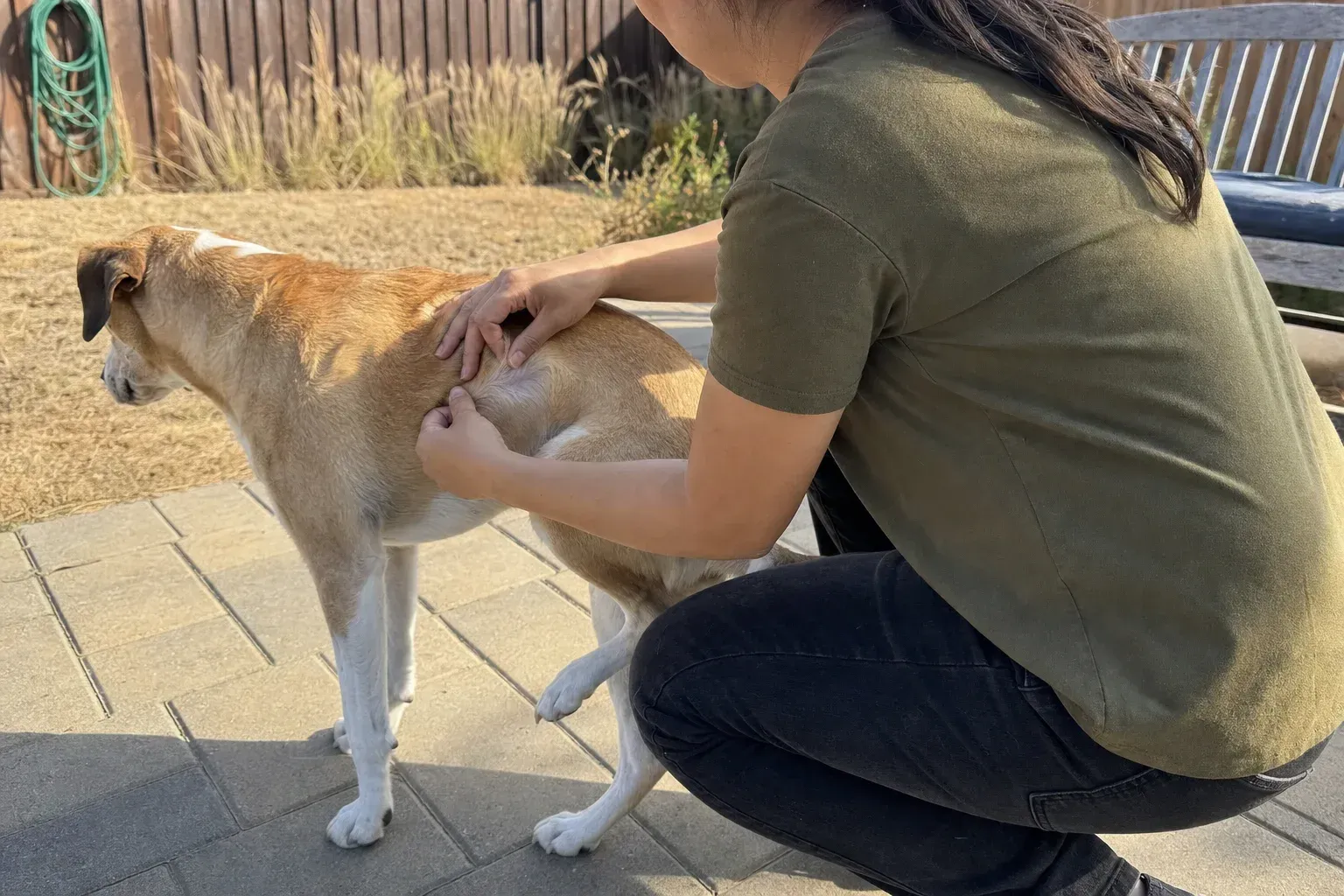
A dog that's on the right schedule comes out of each appointment looking like this.
Finding the Right Schedule for Your Dog
If you're not sure where your dog lands, the first visit is the best time to ask. A groomer who's working with your dog's actual coat can tell you exactly how often that dog needs to come in, which spots are most likely to mat, and what at-home maintenance keeps the coat manageable between visits.
For dogs who are calm and easy at the salon but haven't been on a regular schedule, starting with a mobile dog bath in Danville is a good reset visit. For dogs who need a haircut or coat length adjustment, the mobile dog haircut in Danville gets the coat to the right starting length for a regular schedule to work. If your dog gets anxious at grooming appointments, we wrote about why anxious dogs do better with a mobile groomer in Danville separately.
Mochi is on a five-week schedule now. Her face takes ten minutes instead of forty-five. Same dog, just earlier.