How to Dry a Dog After a Bath Without Leaving a Damp Undercoat
Your dog feels dry when you stroke their back, but part the coat and the hair near the skin is still damp. That's the tricky part of learning how to dry a dog after a bath, especially with a thick double coat. The good news is that a simple routine gets you all the way down to the skin.
Here's a step-by-step process, how to reach a dense undercoat, the tools that make it easier, and why finishing the job matters so much for your dog's skin and coat.
Quick answer: blot with absorbent towels, then use a dryer made for dogs on a cool or low-heat setting, working section by section until the hair separates down to the skin. Never use a human hair dryer, never leave your dog alone with a running dryer, and finish by checking the undercoat in the thickest spots.
How to Dry a Dog After a Bath, Step by Step
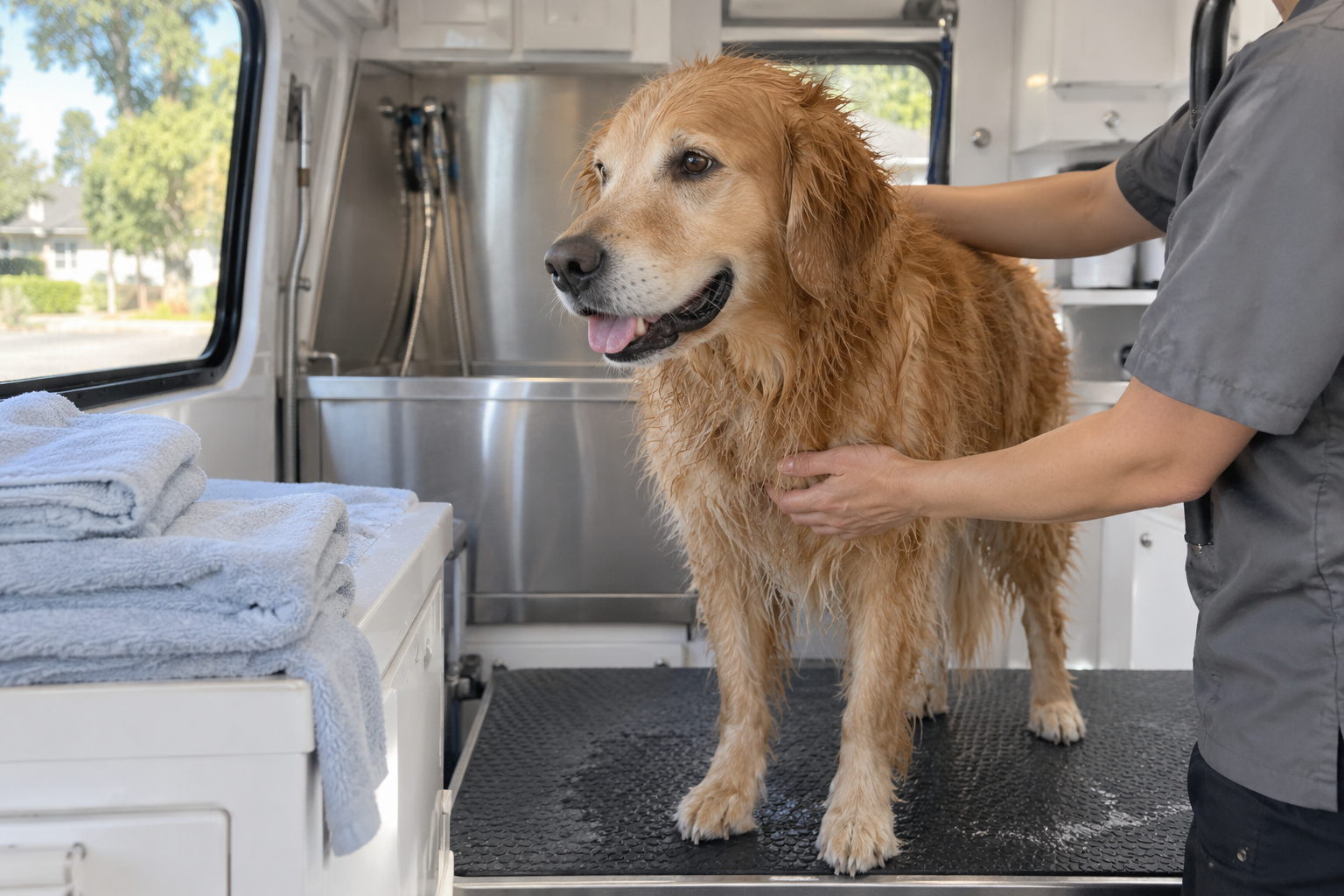
- Prepare: before the bath, set out two or three absorbent or microfiber towels, a nonslip mat, a brush and your dog dryer.
- Squeeze and blot: press water out of the coat with your hands, then blot section by section, switching to a dry towel when one is soaked.
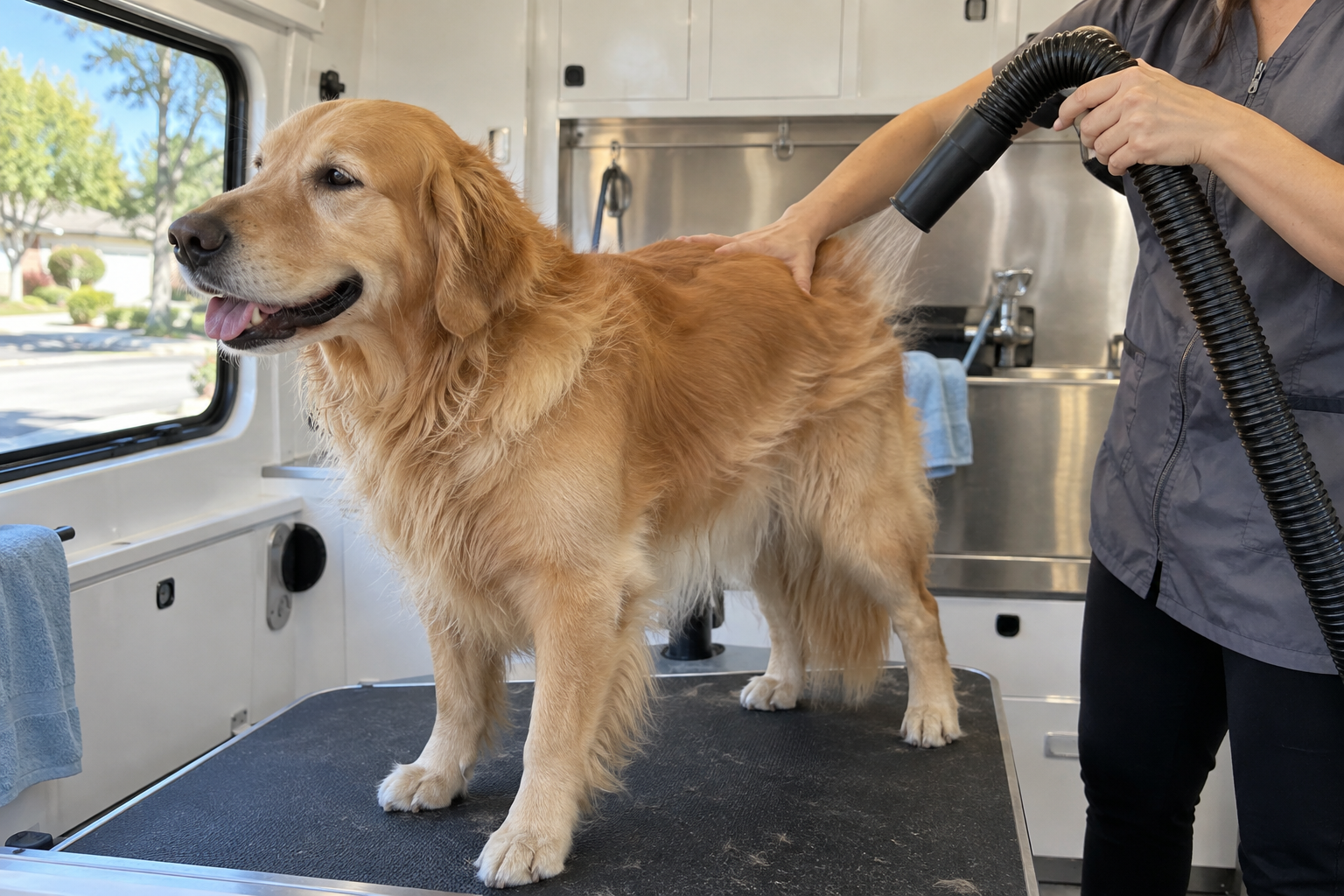
- Dry with a dog dryer: use a dryer made for dogs on a cool or low-heat setting, keeping the airflow moving and away from the face and ears.
- Brush as you dry: on longer or thicker coats, brush each section while the air moves through it.
- Check underneath: part the coat at the neck, chest, thighs and tail to make sure the hair next to the skin is dry too.
The AKC's guide to drying dogs is clear on one point: don't use a human blow dryer on your dog. It also suggests avoiding heat on the coat, since it can burn the skin. High-velocity dog dryers, sometimes called forced-air dryers, work by blowing the water out of the coat instead of heating it.
Why Drying All the Way Matters
Drying is more than comfort. The AKC explains that drying your dog helps keep them warm, prevents mats and tangles, stops bacteria growth that may lead to skin infections, and helps get rid of that wet-dog smell.
A damp layer sitting against the skin is where trouble tends to start, so the goal is always dry to the roots, not just dry on top. A coat that still feels cool near the skin, clumps together or keeps a wet smell isn't finished yet. These quick checks tell you how you're doing:
| What you notice | What it tells you |
|---|---|
| Towel becomes soaked quickly | Replace it with a dry absorbent towel |
| Outer hair feels dry but deeper hair is damp | The coat needs further drying beneath the surface |
| Long hair starts twisting into tangles | Stop rough rubbing and ask about gentler handling |
| Dog pulls away from one area repeatedly | Check comfort and seek advice if there may be pain |
| Drying becomes a struggle | Pause and arrange help with the method or handling |
How to Dry a Dense Undercoat
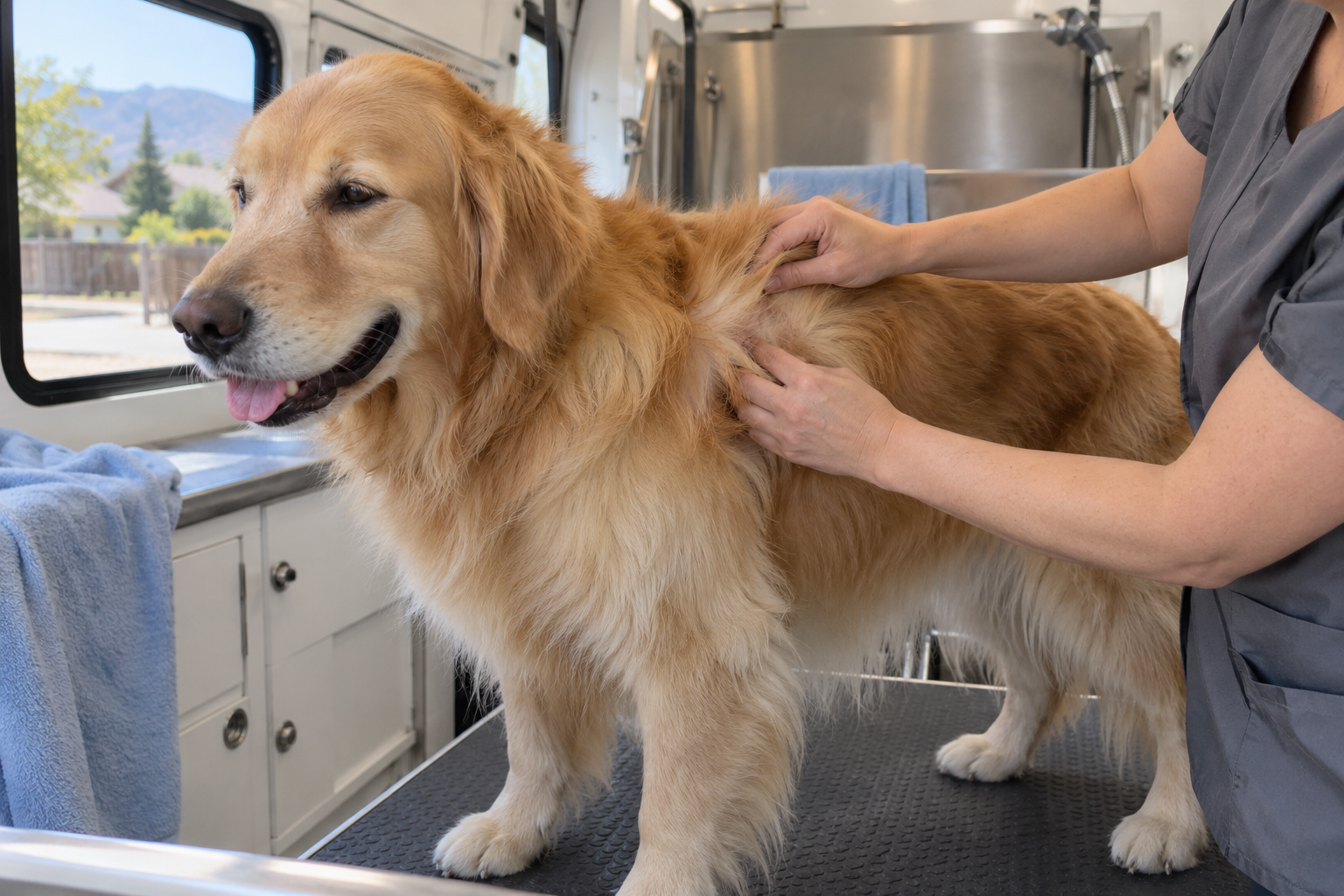
A thick double coat traps water under the outer layer, and as the AKC notes, it can be difficult to fully dry dogs with thick fur with just a towel. That's where a high-velocity dog dryer earns its place. Hold the nozzle a little away from the coat and move it slowly, one section at a time, so the air opens the coat and pushes water out from the skin.
Work from the neck back, then the chest, thighs and tail, where the undercoat is usually thickest. Brushing with a slicker brush as you go helps the air reach deeper, and you'll see the coat start to separate easily when it's dry.
Regular brushing makes bath day easier too. The AKC's double-coat grooming guide recommends brushing with a slicker brush and following with a comb at least once a week. It notes that a dog in a humid climate who isn't brushed weekly may have a thick undercoat that gets packed in and keeps moisture next to the skin, and it advises against shaving a double coat unless tangles are so heavy that the skin can't dry.
Helpful Tools: Towels, Dryers and Quick-Dry Sprays
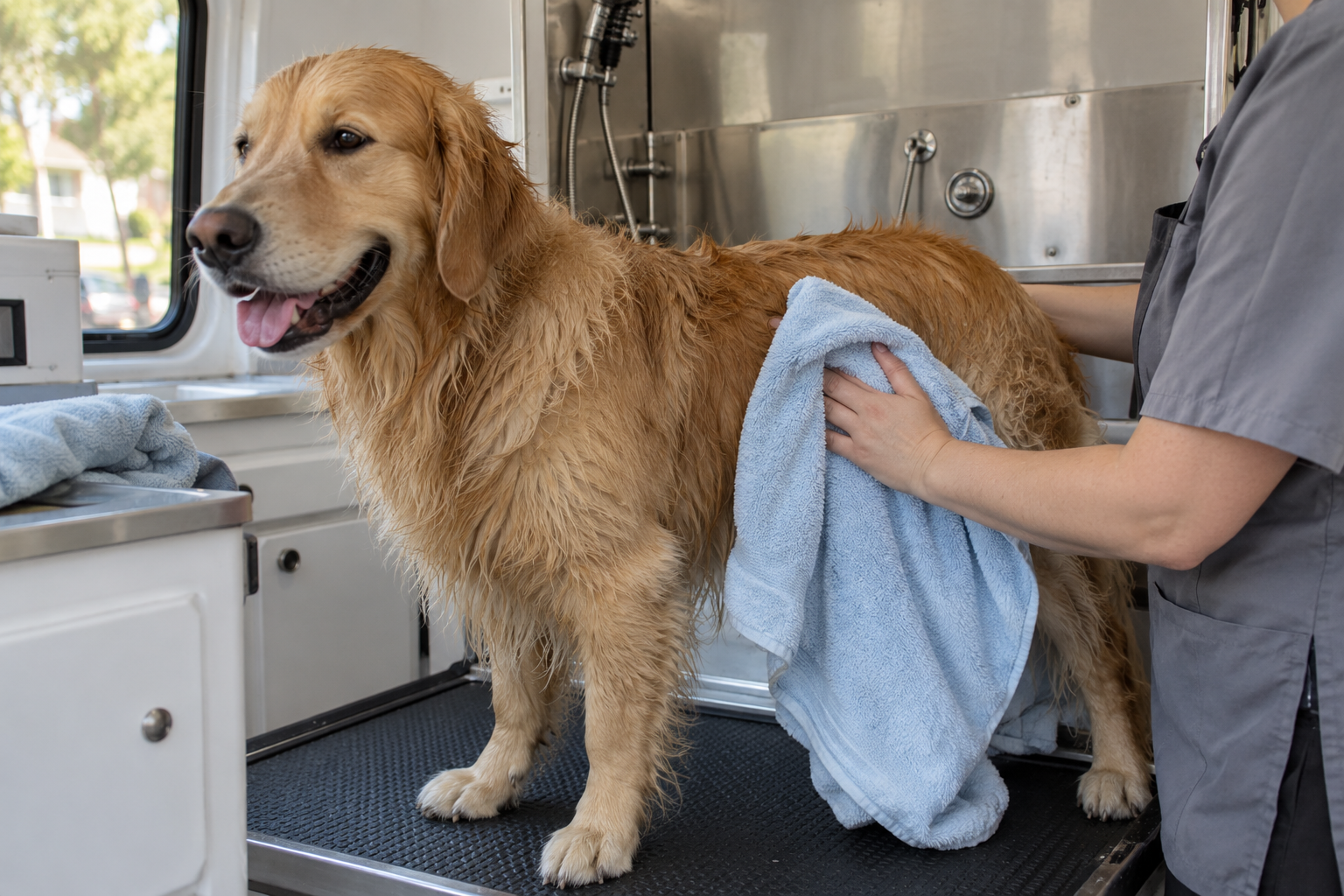
- Microfiber towels: the AKC notes they're lightweight and absorb more water than an average bath towel.
- A dog dryer: a high-velocity or forced-air model built for dogs, used on a cool or low-heat setting.
- Quick-drying sprays: the AKC says these can help speed up drying after a bath.
- A slicker brush and comb: for opening the coat as it dries and checking your work.
- A nonslip mat: so your dog feels steady while you work.
Give the face and feet their own quick attention. Pat the face with a small hand towel instead of aiming a dryer at it, and dry between the toes and paw pads, where water likes to hide.
Whatever you use, stay with your dog the whole time, keep the air away from the eyes and ears, and take a break if your dog gets restless or warm. If you'd rather skip the dryer altogether, the Boops N' Bubbles bath package includes a hand blow-dry and brush.
Drying Boxes and Unsupervised Drying
The RSPCA's grooming guidance raises specific concerns about drying boxes. Inside one, a dog can't move away from the heat source even when someone is watching, so it can't control its own body temperature. The RSPCA also warns that dogs have suffered severe burns or died when equipment was faulty or when they were left unsupervised while being dried.
The AKC adds that some dogs find being contained with a crate dryer stressful. At home, the safest approach is hands-on: towels, a dog dryer and your full attention.
If your dog is nervous about the dryer, let them see and sniff it while it's off, then run it briefly from across the room and reward calm behavior. If the dryer is still too much, towel dry thoroughly and keep your dog in a warm, dry room until the coat is completely dry.
Make Bath Day Easier With Boops N' Bubbles
A full bath package covers more than drying: a bath with premium shampoos chosen for your dog's skin and coat, a de-shed treatment if needed, a hand blow-dry and brush, a nail trim or file, ear cleaning, and a paw pad and sanitary trim.
Grooming happens one-on-one in a fully equipped van at your door, and your dog is never crated. If you're looking for a mobile dog groomer in Pleasanton, CA or nearby, call (925) 553-4537 and mention your dog's coat type and any dryer worries.