How to Prevent Dog Mats Between Grooming Appointments in Walnut Creek
Talked to a Walnut Creek owner last year whose cockapoo hadn't been brushed in six weeks between appointments. Not because she was neglecting the dog. She just didn't know six weeks was the critical window for that coat type. When the dog came in, the mats had fused to the skin behind the ears and under the armpits. There's only one option at that point. And it's not what anyone wants.
Quick answer: Mats form when loose dead hair tangles with the live coat and compresses. The fix is consistent brushing, the right tools, and knowing which spots on your dog mat fastest. Most mat problems are preventable with a 10-minute brush routine three to four times a week.
What Actually Causes Mats to Form
Here's the mechanism. Shedding hair doesn't always fall out on its own. It detaches from the follicle but stays tangled in the live coat. That dead hair catches on itself, picks up debris, and over time compresses into a mat. Movement speeds it up. The friction from walking, playing, or even lying down pushes loose hair into tighter knots.
Moisture makes it worse. After a bath, swim, or rain, tangled hair tightens as it dries. If you're not brushing before and after water contact, you're setting up mats. Collar friction, harness straps, and areas where legs meet the body (the armpits) are the fastest-matting spots on any dog.
Which Breeds Are Most at Risk
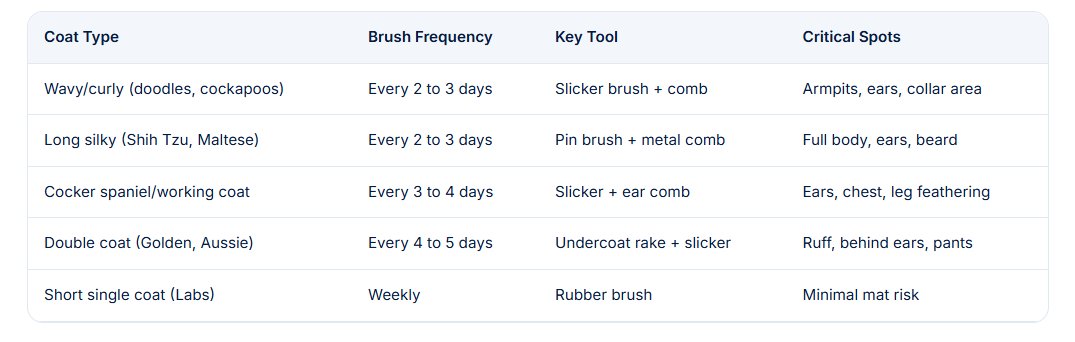
Straight answer: any breed with a wavy, curly, or long coat. The texture catches shedding hair instead of letting it fall out. Double-coated breeds mat when the loose undercoat packs into the topcoat. Short single-coated dogs (Vizslas, Boxers, Dalmatians) almost never mat.
High-risk breeds common in Walnut Creek: doodles of all kinds, cockapoos, Shih Tzus, cocker spaniels, Maltese, bichons, poodles, and any herding breed with a longer working coat. For these dogs, brushing isn't optional maintenance. It's the thing that keeps professional grooming appointments from becoming dematting emergencies.
The At-Home Brush Routine That Actually Prevents Mats
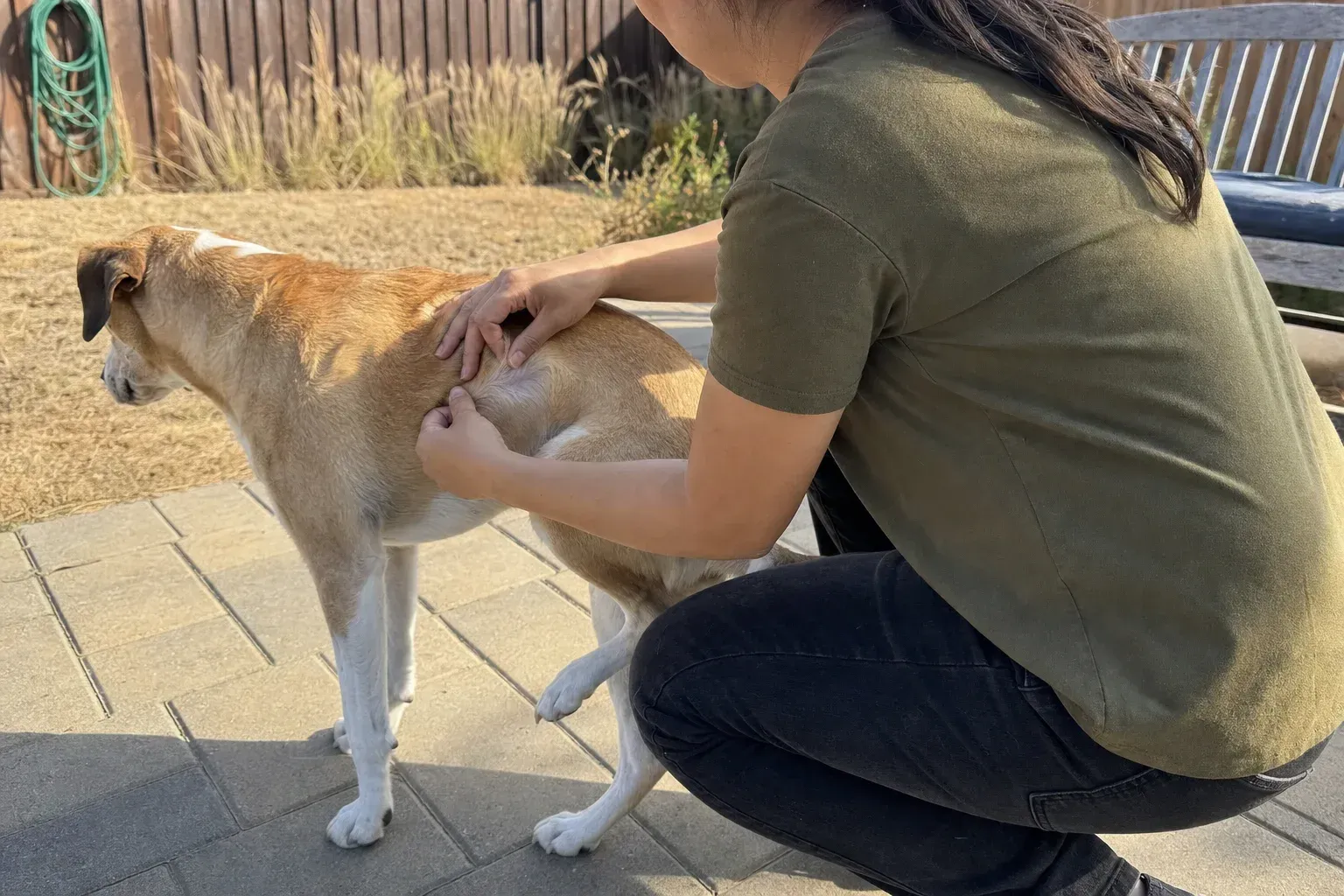
Most owners brush the dog's back and call it done. The back mats almost never. The problem spots are: behind the ears, under the collar, inside the elbows and armpits, behind the knees, the base of the tail, and around any harness contact points. Those six areas need to be checked every single brushing session.

When a Mat Is Already There
Small mats, caught early, can often be worked out with a dematting tool or spray conditioner and a comb. Work from the tip inward toward the skin, not from the root outward. Going root to tip pulls the mat tighter and hurts the dog.
If the mat is larger than a quarter, or if the dog reacts when you touch the area, stop and book an appointment. Forcing a large mat through isn't something a home brush session handles well. The groomer has better tools, better leverage, and can read when the dog has had enough.
The Shave vs. Detangle Decision
Here's where owners often push back on groomers. 'Can't you just cut the mat out?' Sometimes yes, for a single small mat on an accessible spot. But mats that have tightened to the skin can't be cut out safely with scissors. The skin tents up into the mat, and a blind cut risks cutting skin.
The alternative is clipping the area short so the mat lifts away from the skin. That's not a grooming failure. It's the only safe option. The coat grows back in 8 to 12 weeks. Dematting a coat that's beyond what's safe to work through takes longer, hurts the dog, and risks bruising the skin. A good groomer will tell you which situation you're in before starting.

What to Ask at Your Next Appointment
At the end of your dog's visit, ask the groomer to show you where the mats started and which areas to focus on at home. A good groomer will point to the specific spots that needed the most work that day. Write it down. Those are the spots your dog's coat naturally mats, and that doesn't change.
- Ask where the worst tangles were this visit
- Ask what brush is right for your dog's exact coat texture
- Ask how often you should be brushing between visits
- Ask if your current brush is reaching below the topcoat
- Ask if you should space appointments closer together during coat change season
When a Professional Visit Solves What Brushing Can't
If your dog's coat has gotten past what home brushing can manage, book a professional session before it gets worse. The
mobile dog haircut in Walnut Creek includes dematting work as part of the haircut session. The groomer can address the existing mats and set the coat up for easier maintenance between appointments.
For dogs who aren't matted but are getting close, a
mobile dog bath in Walnut Creek with a full blow-dry and brush-out resets the coat and shows you exactly what the baseline looks like. That's useful information for calibrating your at-home routine.
The six-week rule: if you haven't brushed a wavy or curly coat in six weeks, book an appointment before you pick up the brush. At that point a groomer needs to assess the coat first. Pulling a brush through a coat that's been sitting is a fast way to turn surface tangles into tight mats.