Why Anxious Dogs Do Better with a Mobile Groomer in Danville
Finley came in shaking. Six-year-old Aussie mix, bounced from two shelters, and hadn't made it through a full groom at any shop in three years. His owner called me after the fourth walk-out. 'He doesn't do well with other dogs around,' she said. 'Or loud dryers. Or being left in a kennel.' That's most grooming salons, all at once.
Quick answer:
Anxious dogs often do much better one-on-one in a mobile van than in a busy salon. No waiting cages, no strange dogs nearby, no being handed off between people. The session is just the dog and one groomer, start to finish, at your own driveway.
What 'Anxious at the Groomer' Really Looks Like
There's a real difference between a dog who's wiggly and a dog who's stressed. Wiggly dogs are normal. They settle in five minutes. Anxious dogs pant heavily, try to climb out of the tub, vocalize through the whole session, or go completely stiff and won't let you touch them. Some lunge. Some shut down entirely.
If your dog has been labeled 'difficult' at a salon, or if appointments end early without finishing the groom, that's usually a stress response. Not a behavior problem. The environment is what's hard, not the dog.
Why the Salon Environment Is Hard for Reactive Dogs
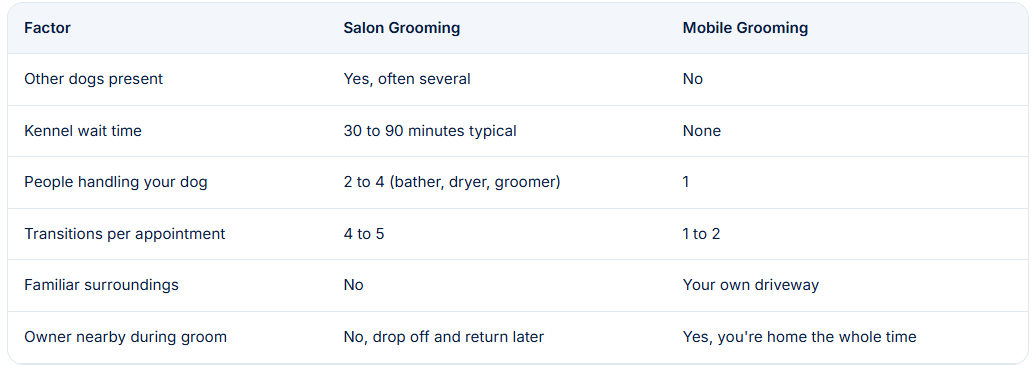
Walk into a grooming salon and you'll notice it immediately. Dogs barking in the back. Metal crates stacked in rows. Two or three groomers running multiple dogs at once. Your dog waits in a holding kennel, then moves to a tub, then waits again in a dryer kennel, then gets moved to the table. That's four or five transitions in one appointment.
For a confident dog, fine. For a reactive or anxious dog, each transition is another trigger. By the time scissors come out, the dog is already maxed out. Most groomers push through anyway because they have six more dogs behind yours.
How a Mobile Van Changes the Setup
A mobile van parks at your driveway. Your dog walks five steps from their front door to the van. No car ride to an unfamiliar building, no lobby smells, no other dogs in the building. The groomer brings everything to the dog instead of the other way around.
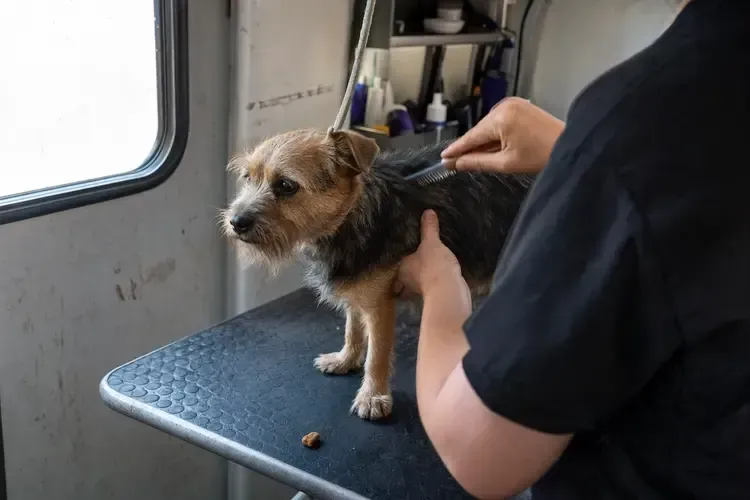
Inside, it's one groomer and one dog. No rotation, no handoffs. The session runs start to finish with the same person. Dogs who've been written off at salons regularly complete full grooms in a mobile setup. Finley did, on his very first visit.
One-on-One Means Nothing Gets Missed
With one groomer doing the full session, your dog isn't a task on a relay. The groomer notices when the dog is getting close to the limit. They slow down. Take a break if needed. They read the dog the whole way through, not just at the start.
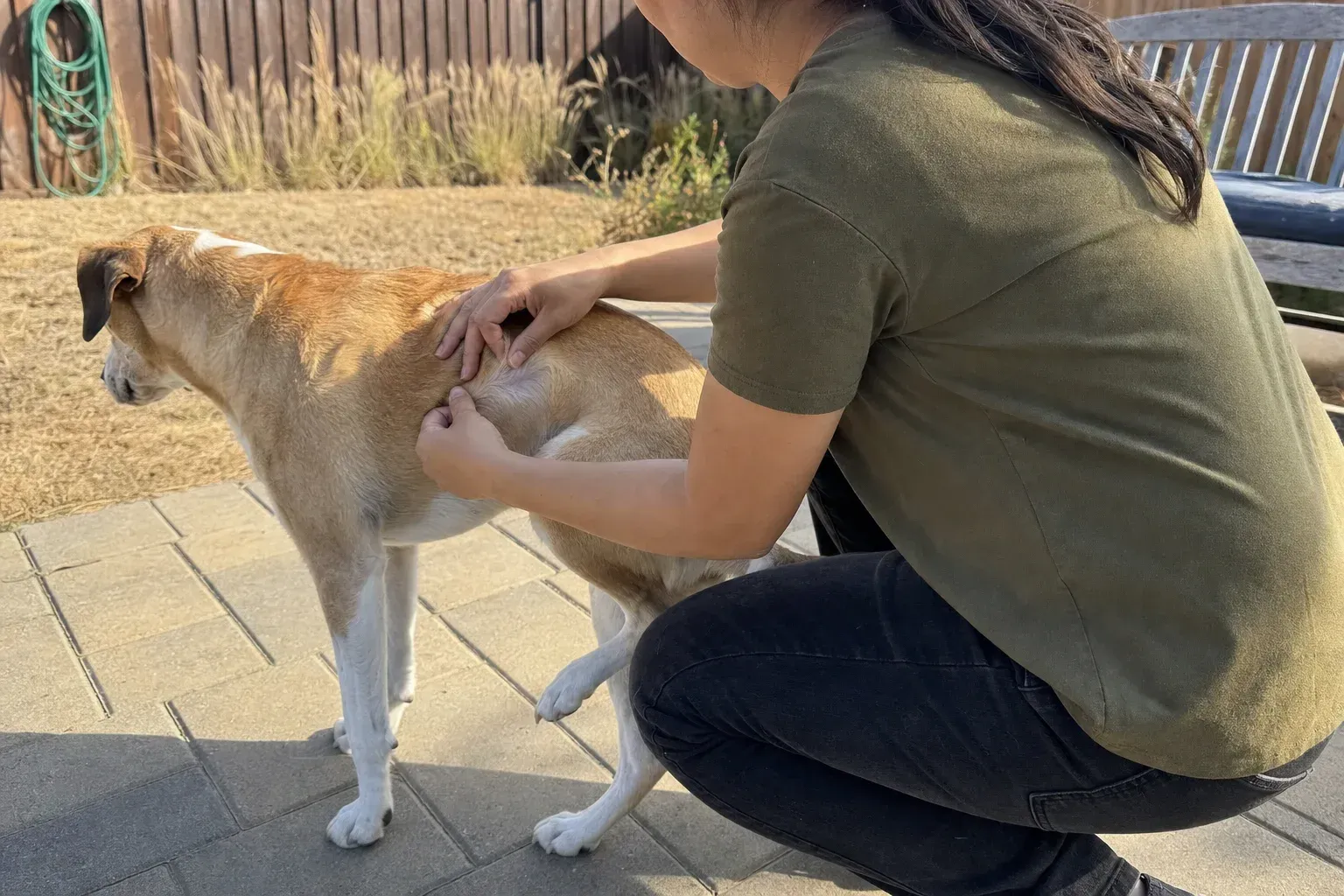
That also means catching things. A skin tag under the coat. An ear that smells off. A paw that flinches when touched. These show up when someone's paying close attention. The mobile dog bath package is a good starting point for dogs who haven't been groomed in a while, or who are coming from a rough salon experience.
What Cage-Free Actually Means During the Appointment
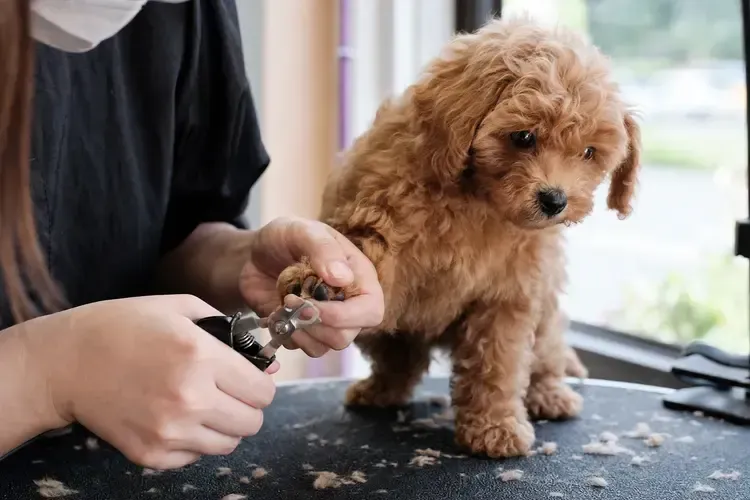
Cage-free doesn't just mean no overnight boarding. In a mobile grooming context, it means no holding crate during your appointment. Your dog comes in, gets groomed, and goes home. No waiting in a metal box between the bath and the blowout, no crate at the end while the groomer finishes someone else.
For dogs who panic in enclosed spaces, this matters a lot. The van is small, yes. But the groomer is right there the whole time, and the dog can see what's happening. That's very different from being alone in a crate with unfamiliar noise all around.
Which Dogs Tend to Respond Best to Mobile Grooming
Most anxious dogs do better in a mobile setting. A few situations where the difference is biggest:
- Rescue dogs with unknown history around other animals
- Dogs who are reactive on leash or in crowded spaces
- Dogs who have needed mild sedation for grooming in the past
- Senior dogs who get overwhelmed or overstimulated easily
- Puppies being introduced to grooming for the first time
- Dogs with handling sensitivities around ears, paws, or the rear
When to Talk to Your Vet First
Mobile grooming isn't a substitute for veterinary care when a dog's anxiety is severe. If your dog has bitten a groomer, requires sedation to finish a groom, or shows a full panic response every time, talk to your vet before booking anywhere. A vet can advise on behavioral support or short-term options that make grooming safe for the dog.
For most mildly anxious dogs, the mobile setup is enough of a change that things go well. But I'd rather tell you that upfront than have you learn it mid-appointment.
If you're in Danville and your dog has struggled at a salon, the mobile dog bath package in Danville is a lower-commitment way to try the mobile experience before committing to a full haircut visit. Start with the bath, see how your dog responds, and go from there.
Finley finishes every appointment now. He still doesn't love the dryer. But he stands for it, takes his treat, and walks back inside without shaking. That's the goal.