Why Your Dog's Shampoo Actually Matters: What Mobile Groomers Choose and Why

Tammy Slettehaugh • July 2, 2026

Quick answer: Most dogs are fine with a good-quality standard shampoo. But dogs with dry skin, allergies, oily coats, or sensitive skin genuinely benefit from a formula matched to their specific condition. A mobile groomer who picks the right shampoo for your dog is doing something a one-size-fits-all salon often doesn't.


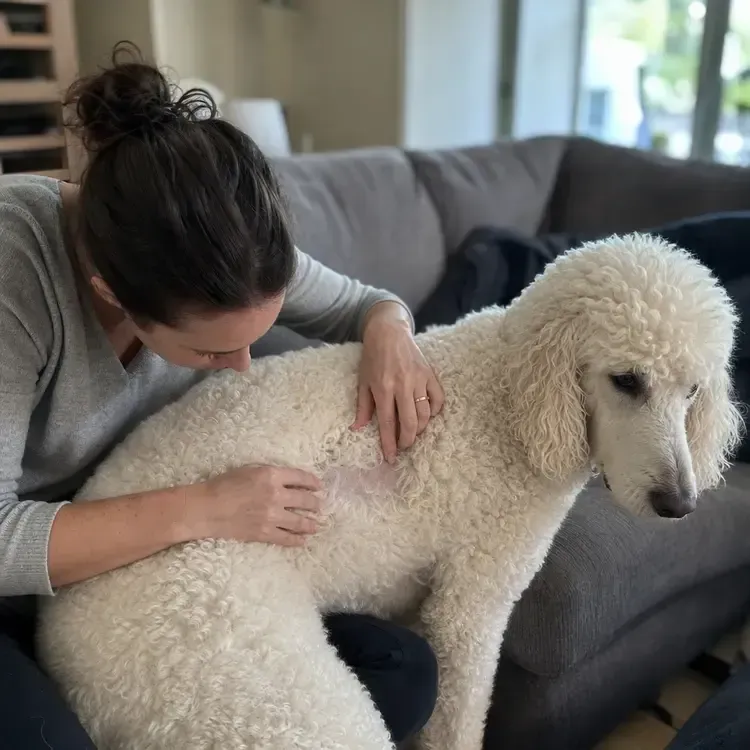
Cooper is a two-year-old goldendoodle from Dublin. His owner had been buying the same dog shampoo from the pet store for a year. Cooper's coat was clean after baths but he'd start scratching his sides within a week. When I checked his skin at his first appointment, it was dry. Not irritated, not infected — just stripped of natural oils. The shampoo was too harsh for his coat type. A hydrating formula, and the scratching stopped.

How a mobile groomer decides which shampoo to use

It's not random. Before any bath, a good groomer looks at the coat type (short, long, double-layered, curly), checks the skin for dryness, flaking, oiliness, or redness, and considers whether the dog has any known sensitivities. That assessment takes about 60 seconds. The shampoo selection follows from it.

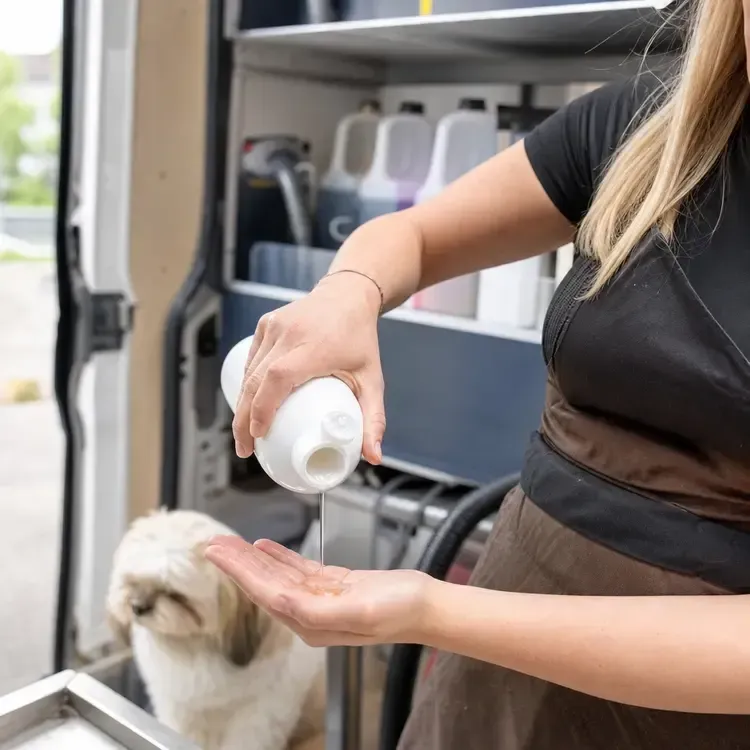
Boops N' Bubbles selects shampoo based on each dog's individual skin and coat type — that's part of how the bath with premium shampoos service actually works. It sounds like a small detail. It's the difference between a bath that makes the coat feel great for two weeks vs. one that leaves it dull and itchy by the following Tuesday.

Skin conditions that change which formula is right

There are four skin situations where the shampoo choice really matters:


Skin Condition What You See Right Formula
Dry skin Flaking, dull coat, scratching after baths Moisturizing shampoo with oatmeal or aloe
Oily skin Coat feels greasy quickly, doggy smell returns fast Degreasing shampoo, may need two rounds
Sensitive / allergic Redness, hives, or reactions after bathing Hypoallergenic, fragrance-free formula
Seborrhea Heavy flaking, greasy patches, stronger odor Medicated formula — vet guidance often needed too
Normal coat No issues, healthy skin Quality general-purpose shampoo


What premium shampoo includes that a standard wash doesn't

A premium shampoo isn't just a fancier bottle. The key differences:

  • Better pH balance (dog skin is more alkaline than human skin — cheap shampoos strip the coat)
  • Targeted active ingredients (oatmeal for dry, enzyme formulas for odor, tea tree for oily)
  • Fewer synthetic fragrances (one of the most common skin irritants in cheap shampoos)
  • Coat-specific conditioning agents (curly vs. straight vs. double-coat behave differently post-wash)

The result shows in the coat. A dog washed with the right formula has a noticeably softer, cleaner result that lasts longer between baths — usually 2 to 3 weeks vs. 1 to 1.5 with a generic product.

The conditioner question: who actually needs it

Not every dog needs conditioner. Short-coated breeds (labs, beagles, boxers) rarely benefit — their coat dries fast and doesn't tangle. Long, curly, or double-coated breeds usually do. Doodles, poodles, shih tzus, yorkies, cocker spaniels — conditioner reduces static, softens the coat, makes brushing easier, and reduces tangles forming between baths.

The premium conditioning add-on is worth it for any dog with a coat that tangles between appointments.


How to tell your Dublin groomer what you've been noticing

You don't need to know what formula is right. You just need to know what you've observed. 'She scratches about a week after her bath' or 'his coat feels greasy really fast' or 'I've noticed some flaking behind his ears' — all of these tell a groomer exactly what to look for.

If your dog had an allergic reaction to something in a previous bath (redness, welts, intense scratching immediately after), always mention that. It changes everything about the product selection.

Boops N' Bubbles serves Dublin with fully mobile appointments — no salon, no cage, one-on-one attention from arrival to pickup. The shampoo thing isn't a upsell. It's just part of how the service actually work
By Tammy Slettehaugh July 20, 2026
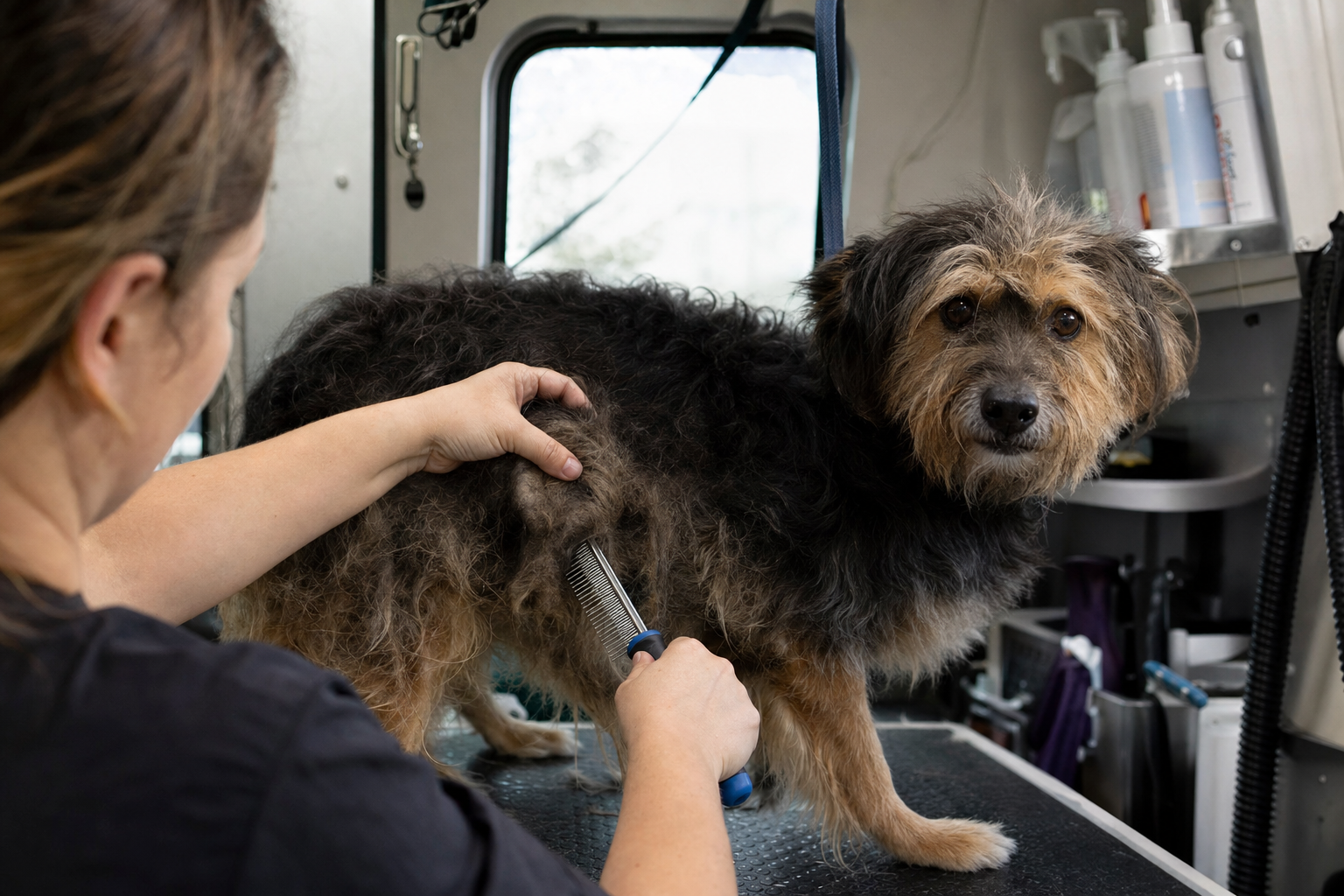
Talked to a Walnut Creek owner last year whose cockapoo hadn't been brushed in six weeks between appointments. Not because she was neglecting the dog. She just didn't know six weeks was the critical window for that coat type. When the dog came in, the mats had fused to the skin behind the ears and under the armpits. There's only one option at that point. And it's not what anyone wants. Quick answer: Mats form when loose dead hair tangles with the live coat and compresses. The fix is consistent brushing, the right tools, and knowing which spots on your dog mat fastest. Most mat problems are preventable with a 10-minute brush routine three to four times a week. What Actually Causes Mats to Form Here's the mechanism. Shedding hair doesn't always fall out on its own. It detaches from the follicle but stays tangled in the live coat. That dead hair catches on itself, picks up debris, and over time compresses into a mat. Movement speeds it up. The friction from walking, playing, or even lying down pushes loose hair into tighter knots. Moisture makes it worse. After a bath, swim, or rain, tangled hair tightens as it dries. If you're not brushing before and after water contact, you're setting up mats. Collar friction, harness straps, and areas where legs meet the body (the armpits) are the fastest-matting spots on any dog. Which Breeds Are Most at Risk Straight answer: any breed with a wavy, curly, or long coat. The texture catches shedding hair instead of letting it fall out. Double-coated breeds mat when the loose undercoat packs into the topcoat. Short single-coated dogs (Vizslas, Boxers, Dalmatians) almost never mat. High-risk breeds common in Walnut Creek: doodles of all kinds, cockapoos, Shih Tzus, cocker spaniels, Maltese, bichons, poodles, and any herding breed with a longer working coat. For these dogs, brushing isn't optional maintenance. It's the thing that keeps professional grooming appointments from becoming dematting emergencies. The At-Home Brush Routine That Actually Prevents Mats Most owners brush the dog's back and call it done. The back mats almost never. The problem spots are: behind the ears, under the collar, inside the elbows and armpits, behind the knees, the base of the tail, and around any harness contact points. Those six areas need to be checked every single brushing session. 
By Tammy Slettehaugh July 15, 2026
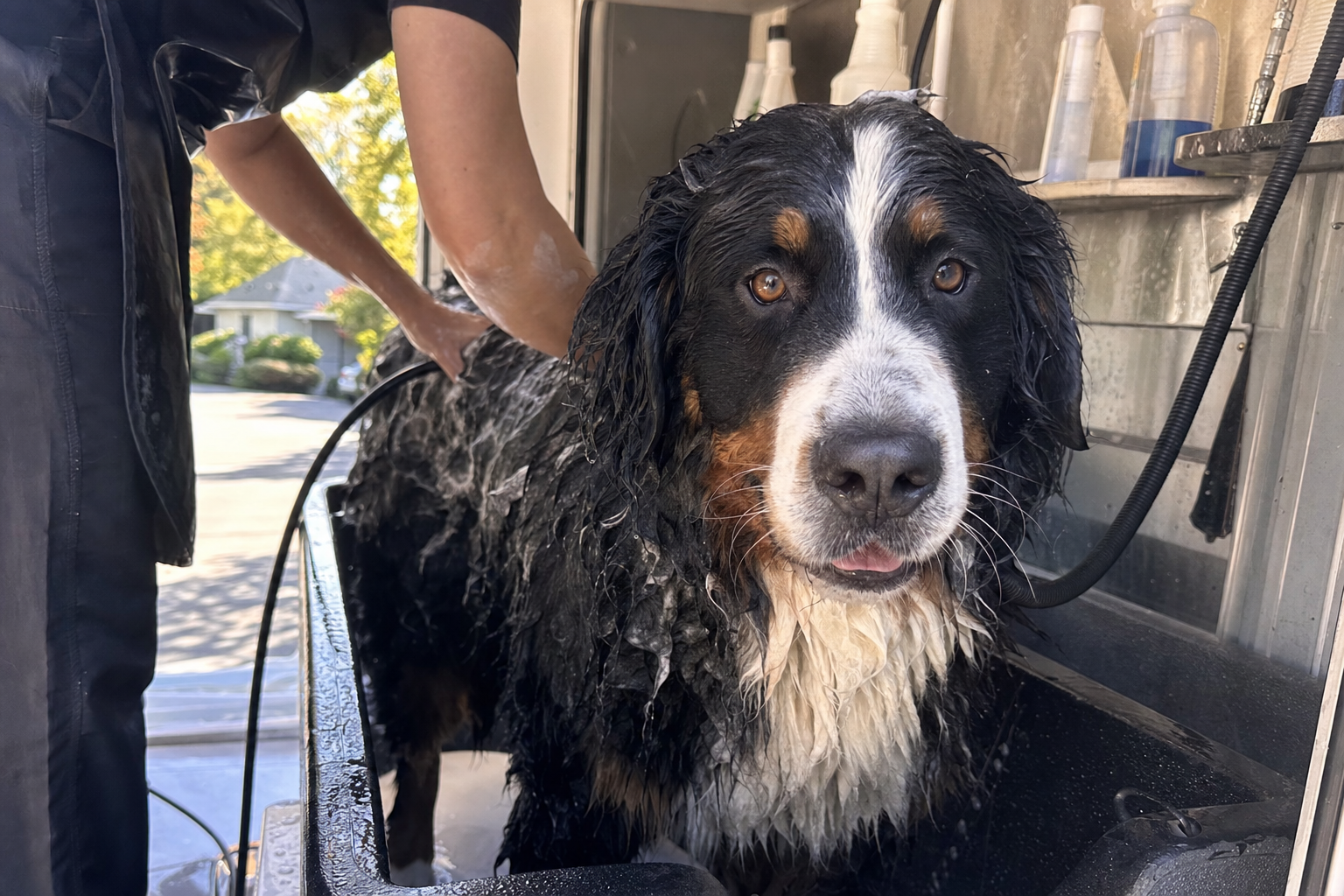
People ask me whether mobile grooming works for big dogs. I run seven grooming vans. My biggest regular client is a 110-pound Bernese mountain dog named Tank. Short answer: yes, it works. Longer answer: there are a few things that are different from what a small or medium dog owner would expect, and it's worth knowing them before you book. Q uick answer: Mobile grooming works well for large breeds. The van's tub accommodates dogs up to around 120 pounds in most cases. Sessions run longer (1.5 to 2.5 hours for large breeds), and some positions require the dog to step onto the floor temporarily during the dry. Everything else about the experience, one-on-one, cage-free, at your driveway, is the same. Why Large Dogs Sometimes Do Better with Mobile Grooming Salons are designed around medium-dog workflows. The tubs are standard size. The tables aren't always adjustable enough for a dog with a 30-inch back. Getting a 90-pound dog in and out of a raised salon table multiple times over a two-hour session is stressful for the dog and hard on the groomer. In a mobile van, the tub is ground-level. The dog can step in and out without being lifted. The session is one-on-one, so the groomer isn't rushing to move the dog between stations. For big dogs who are cooperative but slow or who don't do well being rushed, that pace makes a real difference. The Weight and Size Question Most mobile vans can handle dogs up to 100 to 120 pounds comfortably in the tub. Above 120 pounds, it depends on the van setup and the dog's build. A 130-pound Lab-mix might fit fine. A 130-pound Great Dane with a long body might not. If you have a giant breed, it's worth calling ahead to confirm before booking. Width matters too, not just weight. Broader-chested breeds like Rottweilers, Bullmastiffs, and Newfoundlands take up more floor space than their weight implies. The groomer needs room to work around all sides of the dog during the dry. How Long a Large Dog Session Actually Takes The honest number: a large double-coated dog (Golden, Bernese, Husky) takes 1.5 to 2.5 hours for a full groom with a bath. A large single-coated dog (Lab, Weimaraner, Boxer) takes 1 to 1.5 hours. Giant breeds add 30 minutes to either estimate. Water volume is the other factor. A large dog bath burns through 20 to 30 gallons of fresh water. The van's fresh water tank holds 50 to 60 gallons. On a day with back-to-back large dogs, tank management matters. That's one reason mobile groomers with large-dog clientele often space large appointments differently than small or medium dog slots. 
Show More